Contents:
- How Much Do Flower Farmers Make? A Year-by-Year Snapshot
- Year 1: The Shaky Start (Reality Check)
- Typical First-Year Costs & Revenues
- Year 2: Systems, Sales & Scaling Up
- Key Levers for Growth
- Year 3-5: The Profitable Years–Or Plateau?
- Common Income Patterns
- Diversifying: Beyond Bouquets
- Common Spin-Offs
- The Reality of Market Channels
- Popular US Flower Sales Channels
- Profitability by Channel
- What Flowers Bring the Best Returns?
- Top-Performing Flower Crops in the US (2026)
- Realistic Flower Farming Income: Pull-Quote
- Challenges and Hidden Costs
- Frequently Asked Questions
- How much does it cost to start a flower farm in the US?
- Is flower farming profitable as a full-time occupation?
- What flowers are the most profitable to grow?
- How long before a flower farm turns a profit?
- Do I need a greenhouse to start a flower farm?
- Ready to Grow? Action Steps for Future Flower Farmers
Flower Farming Income Realistic Year-by-Year
Picture this: a 45-year-old schoolteacher walks out into her half-acre plot in Indiana, scissors in hand, before her commute. By August, she’s grossed over $18,000 from fresh bouquets sold at the local farmer’s market. The surge in “slow flowers” and local floristry means flower farming income in the US has become an enticing side hustle–or, for the bold, a full-fledged rural business. But what does it really look like, year by year? Forget the Instagram gloss. Let’s get pragmatic.
How Much Do Flower Farmers Make? A Year-by-Year Snapshot
First-year flower farm income: Most US beginners gross $3,000-$15,000 on under one acre, with net profits of $0-$6,000 after costs.
Second year: Growing efficiency, returning customers, and smarter marketing can bump gross sales to $10,000-$40,000, with net profits in the $8,000-$20,000 range.
Third year and beyond: Well-run small farms (1-2 acres, intensive) can reach $40,000-$100,000 in gross sales, with net profits of $25,000-$60,000 typical. Some specialty growers and high-demand regions surpass $150,000 gross.
“The first year, I barely broke even, but by my third, I was regularly netting $35,000 on less than an acre,” shares Maria Jensen, owner of Petal & Plow, LLC in rural Ohio.
Key variables:
- Land owned vs leased
- Crop selection (tulips vs lisianthus, peonies vs sunflowers)
- Direct-to-consumer vs wholesale
- Local demand and competition
- Marketing savvy
Let’s break down what a realistic flower farming income path looks like in detail.
Year 1: The Shaky Start (Reality Check)
Most new flower farmers in America start small–under an acre, often on family land or a backyard. Capital outlay isn’t just seeds and soil; you’ll need irrigation supplies, tools, seed starting equipment, and ideally a hoop house or caterpillar tunnel for season extension.
Typical First-Year Costs & Revenues
| Expense Type | Average Cost (USD) |
|---|---|
| Seeds, bulbs, plants | $1,000-$2,000 |
| Soil amendments | $300-$800 |
| Tools & irrigation | $1,000-$3,000 |
| Marketing/materials | $500-$1,200 |
| Labor (self/unpaid) | $0-$5,000 |
Total: $2,800-$7,000 up-front.
Gross sales: $3,000-$15,000 (heavily dependent on sales channels–direct, CSA, markets, or local florists).
Net income: Often close to breakeven, sometimes negative.
<blockquote>
“Don’t expect a paycheck in year one. Think of it as paid training–if you break even, you’re ahead of most,” says **Linda Cressman, Extension Horticulturist, University of Vermont**.
</blockquote>
Main struggles:
- Navigating unpredictable weather
- Selling in a crowded market (or starting from scratch)
- Underestimating labor–harvesting, arranging, delivering
Year 2: Systems, Sales & Scaling Up
Once you’ve survived a full season, it’s possible to double your revenue through improved soil, crop choices, and marketing. Flowers like dahlias, lisianthus, and peonies (if you planted roots in year one) start to mature, fetching premium prices. Local demand starts to solidify.
Key Levers for Growth
- Better succession planting: Staggering crops so something is always in bloom.
- Establishing CSA subscriptions: $200-$400 per 10-week share, often selling 20-50 shares.
- Nurturing florist/wholesale deals: Florists in the US increasingly want local, specialty stems for $1.50-$3/stem.
“We did $19,300 in year two, mostly bouquets at a $13 average. Our net was just under $9,000 after expenses, all on a half-acre,” reports Jason & Maya Lee, Red Barn Blossoms, Kentucky.
More farms start investing in branded packaging, social media, and larger weekly farmer’s market stalls. Some experiment with weddings (see below).
Year 3-5: The Profitable Years–Or Plateau?
Here’s where US flower growers hit their stride–or hit a wall.
Common Income Patterns
- Direct-to-consumer: A well-established half-acre can gross $25,000-$60,000 annually, netting 40-60% with efficient operations.
- Weddings/events: Custom work can yield $1,200-$5,000 per weekend event, but is labor-intensive and seasonal.
- Wholesale: Larger farms (2+ acres) may focus on wholesale, selling to grocery chains (like Whole Foods) or online platforms (Floralife, Farmgirl Flowers). Margins slimmer (25-35%) but sales volume is higher.
| Year | Avg. Gross Sales | Typical Net (after costs) |
|---|---|---|
| Year 1 | $3,000-$15,000 | $0-$6,000 |
| Year 2 | $10,000-$40,000 | $8,000-$20,000 |
| Year 3+ | $40,000-$100,000 | $25,000-$60,000 |
Critical factors for scaling:
- Labor: Hiring part-timers or interns.
- Infrastructure: Adding walk-in coolers ($3,500-$8,000), delivery vans, more tunnels.
- Marketing: Wedding contracts, bouquet subscriptions, online stores (Shopify, Squarespace).
Burnout alert:
Some hobbyists decide to keep it small, citing labor intensity. Others expand, hiring seasonal crews and outsourcing bouquet making.
Diversifying: Beyond Bouquets
Many successful US flower farms branch out. Why? To stabilize income against seasonality and weather risk.
Common Spin-Offs
- Workshops: “U-pick” events, floral design classes ($50-$120 per person).
- Dried flowers: Stems like statice and strawflower are dried and sold year-round, for up to 3x fresh price.
- Seeds and tubers: Dahlia tubers, ranunculus corms, and specialty seed packets for home gardeners.
- Agro-tourism: Hosting farm stays via Airbnb or Tock, or partnering for photo shoots.
“Last winter, we matched fresh-flower sales with $8,400 from dried bouquets and tubers,” notes Sarah Klein, Sweet Prairie Blooms, Colorado.
The Reality of Market Channels
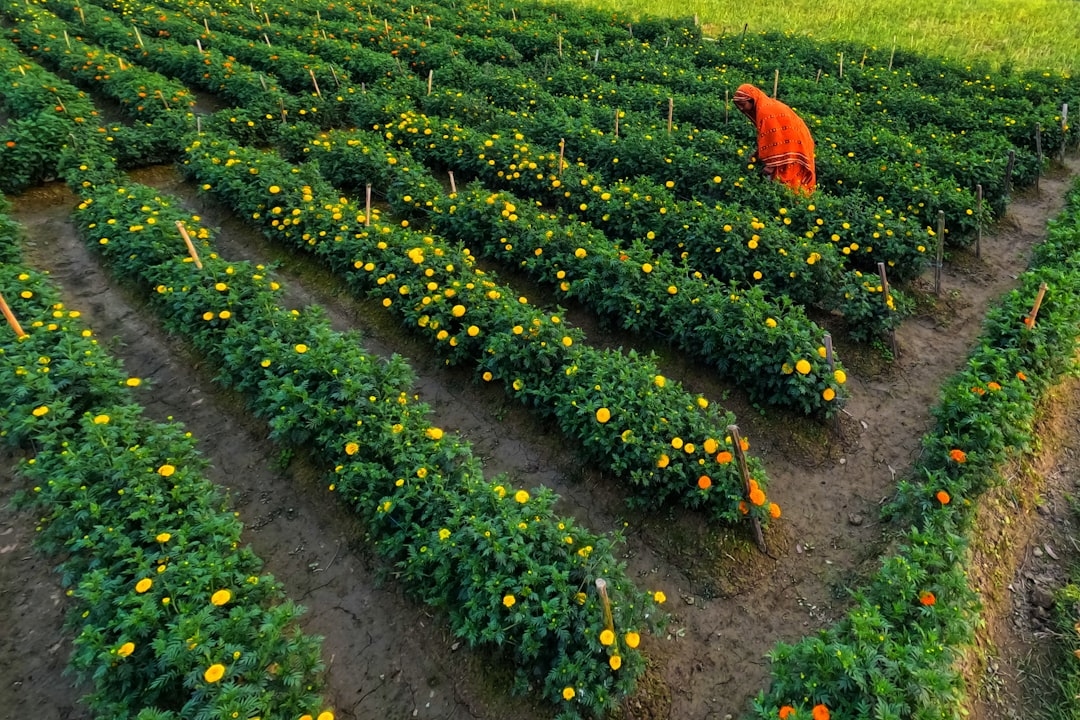
Your income depends as much on how and where you sell, as what you grow.
Popular US Flower Sales Channels
- Farmer’s markets: Hands-on, but best margins. $8-$20 per bouquet common.
- CSAs/subscriptions: Reliable cash flow early in season; direct customer loyalty.
- Florists: Volume buyers, but demanding on quality.
- Online platforms: Shopify, Etsy, and platforms like Slow Flowers or The Bouqs offer e-commerce reach.
- Grocery chains: Volume, standardized pricing, and logistics–often only accessible to larger farms.
Profitability by Channel
| Channel | Gross Margin | Typical Volume | Upsides | Downsides |
|---|---|---|---|---|
| Farmer’s Market | 60-70% | Low-med | Direct feedback, high price | Time-intensive |
| CSA/Subscriptions | 55-65% | Med | Predictable, upfront cash | Must deliver each week |
| Florists | 40-55% | Med-high | Repeat orders, less marketing | Quality/species demands |
| Grocery/Wholesale | 25-40% | High | Large orders | Low margins, tough entry |
| Online Retail | 35-50% | Low-high | Wide reach | Shipping logistics, fees |
What Flowers Bring the Best Returns?
Not all crops are equally lucrative. Some–like peonies or lisianthus–fetch premium prices but take time and skill. Others, like zinnias and sunflowers, are reliable bulk sellers.
Top-Performing Flower Crops in the US (2026)
- Dahlias: $1.50-$2.50 per stem, high demand, versatile.
- Lisianthus: $2.00-$3.50 per stem, premium for weddings.
- Peonies: $2.50-$4.00 per stem, but mature in 3+ years.
- Snapdragons & ranunculus: Early spring, $1-$1.75 per stem.
- Sunflowers: $0.75-$1.25 per stem, market staple, fast and easy.
Most profitable bouquets combine 4-6 of these for unique color and texture. Per Dr. Emily Harper, Horticulture Professor at Iowa State University:
“The ability to grow less common colors–think coral dahlias, chocolate cosmos–can net you 50% higher pricing in urban and wedding markets.”
Realistic Flower Farming Income: Pull-Quote
“For a part-time flower farm on 1 acre, breaking $30,000 gross by year three is entirely within reach with good planning and marketing. But if you want a $50,000+ living, be ready for full-time work and new market channels.”
– Linda Cressman, Extension Horticulturist, UVM
Challenges and Hidden Costs
Building a flower business isn’t all peonies and profit.
- Weather: Late frosts can wipe out early crops, hurricanes devastate entire seasons (notably in the southeast US).
- Labor: Small farm owners report 25-40 hours/week from March through October.
- Local competition: Flower CSAs are trendy; expect more competition in urban and suburban areas.
- Supply chain: Bulb/seed prices rose 18% from 2022-2025, tightening margins.
- Health insurance, retirement, taxes: Few off-the-books perks; plan accordingly.
Frequently Asked Questions
How much does it cost to start a flower farm in the US?
Starting a flower farm on less than one acre typically requires $3,000-$8,000 in first-year investments, covering seeds, soil amendments, tools, and basic infrastructure. Larger-scale or highly mechanized operations may need $15,000-$25,000 upfront.
Is flower farming profitable as a full-time occupation?
Yes, flower farming can be profitable as a full-time business, with many owners on 1-2 acres netting $25,000-$60,000 annually. Achieving higher profits requires efficiency, diversification, and reliable sales channels.
What flowers are the most profitable to grow?
Dahlias, lisianthus, peonies, ranunculus, and unique color sunflowers are among the most profitable US flower farm crops in 2026. These command premium prices, especially when sold directly to consumers or for weddings.
How long before a flower farm turns a profit?
Most US flower farms reach profitability in year two or three, after initial investments and growing issues are resolved. Breaking even in year one is common, with profits increasing as systems and markets stabilize.
Do I need a greenhouse to start a flower farm?
A greenhouse or tunnel isn’t strictly required, but season extension structures help maximize yields and income–increasing first-year gross sales by 25-40% according to Iowa State extension data.
Ready to Grow? Action Steps for Future Flower Farmers
- Start micro: Test the waters on 1/8 acre, selling at local markets or to friends.
- Budget realistically: Expect $3,000-$7,000 in start-up costs, plus sweat equity.
- Win locally: Build relationships with event florists and farmer’s markets–your community is your best marketing.
- Keep records: Track every crop, every sale, every mistake. Data beats dreams.
- Plan for challenges–and growth: Insurance, backup crops, and (eventually) extra hands all make scaling sustainable.
Flower farming in the US isn’t a get-rich-quick scheme. But for those drawn to creativity, community, and the promise of sunrise among the blooms, the rewards can be real–year after year.