Contents:
- Quick Guide: What Is a Botanical Watercolor Techniques Full Course?
- Why Botanical Watercolor? The Florist’s Approach Meets Fine Art
- Essential Supplies: What You Actually Need (and What to Skip)
- Core Botanical Watercolor Techniques (With Floristry Flavor)
- Drawing for Botanicals
- Mixing Colors with Botanical Accuracy
- Detailing and Shadows
- Lessons Breakdown: What a Full Course Covers
- Top Online and In-Person Botanical Watercolor Courses in the US (2026)
- Common Struggles (And Solutions) for Beginners
- Fear of Wrecking the Painting
- Struggling with Greens
- Getting Lost in Detail
- Displaying and Selling Your Botanical Watercolors
- FAQ: Botanical Watercolor Techniques and Courses
- What’s the best flower for beginners to paint in watercolor?
- How much should I spend on my first botanical watercolor setup?
- Can I use reference photos instead of real flowers?
- What’s the difference between botanical watercolor and floral illustration?
- Are online botanical watercolor courses as effective as in-person classes?
Botanical Watercolor Techniques Full Course
Picture a vase of tulips, peonies, or wild bluebells rendered in delicate brushstrokes–vivid, almost touchable, but softer than any photograph. Americans spent $47 billion on flowers in 2025, and yet, there’s an equally passionate world devoted to capturing that fleeting beauty in watercolor. Botanical watercolor isn’t just for artists. It bridges the florist’s eye for arrangement with the painter’s flair for color–no wonder it’s experiencing a renaissance among crafters, gardeners, and professional florists across the US.
Quick Guide: What Is a Botanical Watercolor Techniques Full Course?
A botanical watercolor techniques full course is a structured learning journey covering the core skills and artistic methods for painting plants and flowers in watercolor. In the US, these courses typically feature:
- Step-by-step instruction for drawing and painting flowers, leaves, and stems.
- Lessons on color mixing, layering, and botanical accuracy.
- Hands-on practice with composition, detail, and live specimens.
- Bonus content: sketching techniques, painting backgrounds, and displaying finished work.
- Courses range from $39 (introductory video series) to $450 (in-depth, instructor-led classes with live feedback).
You’ll finish with a portfolio of completed botanical paintings and the confidence to paint any bloom that catches your eye.
Why Botanical Watercolor? The Florist’s Approach Meets Fine Art
Walk into any American flower shop–say, UrbanStems in Washington, D.C., or the legendary French Florist in Los Angeles–and you’ll notice how arrangements aren’t just randomly bunched. There’s a studied, almost painterly balance. That attention to line, shape, and negative space is precisely what top botanical watercolor courses bring to the table.
“Learning watercolor changed how I saw flowers. As a florist, I arrange stems for impact; as a painter, I notice the subtle curve in a tulip leaf or the way light glows on a rose petal.”
– Maggie Cardenas, botanical illustrator and owner of Skyline Flowers, Denver
Blending floristry insights with painting techniques means courses often use florist-favored flowers: ranunculus, anemones, or classic American garden roses. Students gain a new appreciation for floral structures–and it makes their paintings feel authentic.
Essential Supplies: What You Actually Need (and What to Skip)
Every course will parade a list of must-haves, but only some are essential. Here’s what US-based professional and hobbyist painters agree matters most for botanical watercolor:
| Supply | Best Choice (US brands/retailers) | Typical US Price Range |
|---|---|---|
| Watercolor Paper | Arches 100% Cotton, Cold Press | $18-35 for a 12×16″ pad |
| Paints | Winsor & Newton Professional, Daniel Smith | $8-18 per tube |
| Brushes | Princeton Neptune synthetic (round #4, #6) | $7-15 each |
| Pencil & Eraser | Staedtler Mars Lumograph, kneaded eraser | $2-6 |
| Palette | Mijello Fusion airtight | $12-18 |
| Water Cups | Any non-staining cup or mason jar | Free-$8 |
| Live Flowers/Plants | Local florist, Trader Joe’s, or yard | Varies |
Pro tip: Skip the student-grade paints and invest in fewer tubes of pro-grade color. Botanical artists often use just a handful of pigments–alizarin crimson, ultramarine blue, and quinacridone gold go a long way.
Core Botanical Watercolor Techniques (With Floristry Flavor)
Drawing for Botanicals
- Observation: Use a jeweler’s loupe (Amazon, $16) or your phone’s macro lens to study a bloom like a scientist.
- Light Sketching: Keep pencil marks faint. Erase before painting, or let them vanish under layers.
- Proportion & Placement: Florists ‘build’ arrangements; watercolorists map where each petal, stem, and leaf sits. Use the clock method–imagine petals arranged around a center point, like hours on a clock.
Mixing Colors with Botanical Accuracy
- Realistic Greens: Mix blue and yellow, then shift with a touch of red. Florists spot subtle greens–sage, emerald, olive–so push your mixes with granulating pigments for texture (Daniel Smith’s Undersea Green is a US favorite).
- Petal Textures: Wet-on-wet for soft peonies and poppies; wet-on-dry for crisp-edged tulips or iris.
- Layering: Let each wash dry completely (use a fan if you’re impatient!). Build up depth–just as in a floral arrangement, complexity comes from layering.
Detailing and Shadows
- Negative Painting: Outline highlights and veins by painting the background shadows first–a trick borrowed from modern botanical illustrators.
- Glazing: Wash thin color over dry layers to shift hues organically, mimicking subtle color shifts in petals.
- Shadow Placement: Always consider your light source. Florists arrange for maximum illumination–painters use this to anchor flowers to the page.
Lessons Breakdown: What a Full Course Covers
A high-quality botanical watercolor course in the US (like Emily Jeffords’ “Botanical Watercolor Masterclass” or Skillshare’s top-rated “Painting Florals in Watercolor”) will span these core modules:
-
Foundations
- Understanding botanical forms
- Introduction to key watercolor supplies
- Pencil layout and compositional planning
-
Basic Flower Structures
- Painting single blooms (roses, daisies)
- Exploring leaf shapes (lanceolate, ovate, palmate)
-
Advanced Techniques
- Mixing complex greens, reds, and whites
- Creating realistic shadows and highlights
- Capturing translucency and petal folds
-
Floristry-Inspired Compositions
- Arranging multiple stems in a pleasing layout
- Using negative space (the “breathing room” of a bouquet)
-
Final Projects
- Completed arrangements (wedding bouquets, American wildflowers, seasonal centerpieces)
- Critique and personal style development
Some premium courses ($299+) include personalized instructor feedback, live Zoom sessions, and US-based floral reference photo packs.
Top Online and In-Person Botanical Watercolor Courses in the US (2026)
Here’s how the most popular US botanical watercolor programs compare:
| Course Name | Format | Length | Price (USD) | Unique Feature |
|---|---|---|---|---|
| Emily Jeffords Masterclass | Online | 8 weeks | $399 | Personalized feedback, fresh reference photos |
| Skillshare – “Watercolor Florals” | Online | Self-paced | $39/mo | Huge video library, low cost |
| Botanical Art Society Workshops | In-person (NY, SF, Austin) | 3 days | $450 | Live demos, group critiques |
| Denise Walser-Kolar’s “Botanical Painting Bootcamp” | Online | 10 weeks | $545 | Advanced botanical accuracy |
| Denver Botanic Gardens: Watercolor | In-person | 6 weeks | $420 | Paint live flowers in garden setting |
“Our students range from hobby gardeners in Pennsylvania to professional florists in Portland. Botanical watercolor gives them a new way to celebrate the flowers they love.”
– Sarah Lindholm, course director, Botanical Art Society, NY
Common Struggles (And Solutions) for Beginners
Fear of Wrecking the Painting
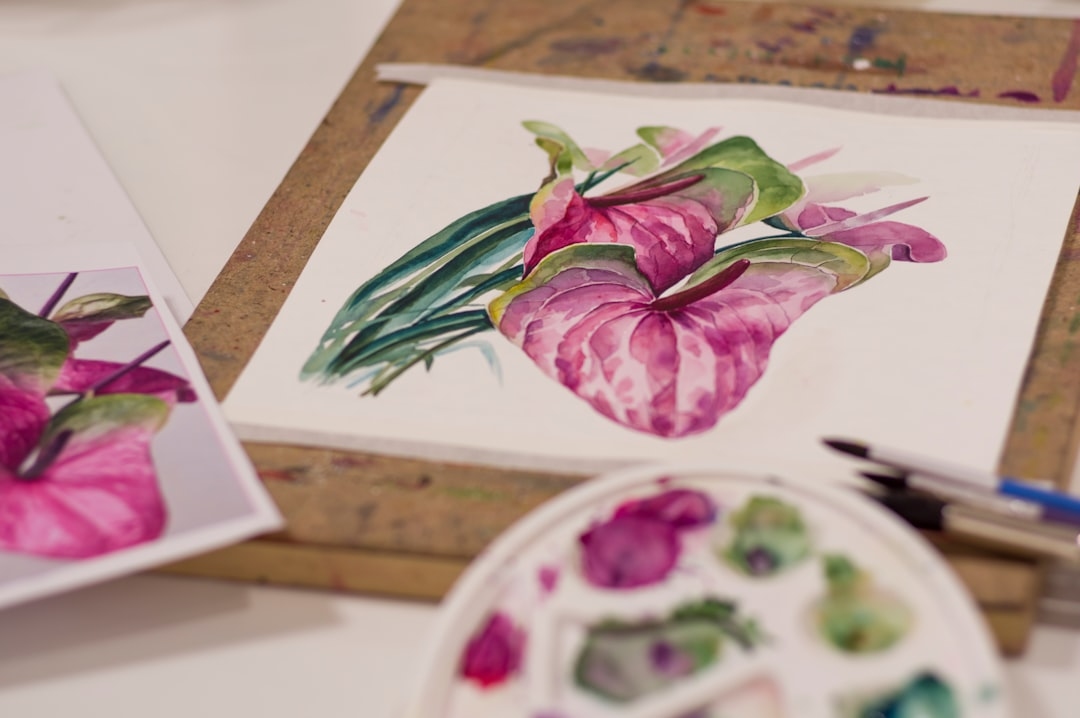
Everyone smudges or overworks their first few petals. US instructors recommend starting with cheap practice paper (Canson XL, $12 per pad) before moving to Arches or Legion Stonehenge.
Struggling with Greens
American beginners often end up with “Christmas tree” green. The fix: mix your own, and study florist palettes for inspiration. Try this formula:
- 1 part ultramarine blue
- 1 part quinacridone gold
- Tiny touch of alizarin crimson
- Dilute with water for soft, sagey greens
Getting Lost in Detail
Botanical watercolor isn’t scientific illustration (unless you want it to be). Successful US artists suggest focusing on three “hero” flowers per composition, letting background blooms fade–just like a florist places focal stems in an arrangement.
Displaying and Selling Your Botanical Watercolors
Many US artists combine watercolors and floristry by offering custom bouquet portraits. Etsy searches for “floral watercolor commission” grew 31% between 2024 and 2026 (Etsy US Marketplace Data). Some ideas:
- Gift idea: Paint a friend’s wedding bouquet for $90-$350.
- Home décor: Frame and sell botanicals at local makers’ markets or via Instagram shops.
- Workshops: Partner with a flower shop (like Farmgirl Flowers in San Francisco) to host “Paint & Petal” evenings.
US buyers love botanicals with regional relevance: bluebonnets in Texas, wild poppies in California, peonies in the Midwest.
FAQ: Botanical Watercolor Techniques and Courses
What’s the best flower for beginners to paint in watercolor?
Anemones, tulips, and daisies are beginner-friendly due to their simple shapes and bold colors. These flowers are popular in US florist arrangements and offer forgiving forms for learning key techniques.
How much should I spend on my first botanical watercolor setup?
Expect to spend between $50 and $100 in 2026 for student-quality supplies (paper, a basic palette, 2-4 brushes, and a few tubes of pro-grade paints). Upgrade paper and pigments as your skills grow.
Can I use reference photos instead of real flowers?
Absolutely! Many US courses supply high-resolution reference photos. For accuracy, supplement with fresh flowers from a local florist or grocery store–the subtle details of color and shape often differ from photos.
What’s the difference between botanical watercolor and floral illustration?
Botanical watercolor emphasizes realistic, botanical accuracy–think scientific illustration, with a focus on plant anatomy and detail. Floral illustration is broader, often more stylized, and prioritizes artistic impact over precision.
Are online botanical watercolor courses as effective as in-person classes?
For most US learners, online courses deliver excellent results, especially those including instructor feedback. In-person workshops offer real-time guidance and the chance to paint from life, which some students find valuable for developing observation skills.
Ready to paint your own bouquet? Sign up for a US-based botanical watercolor course or gather a few blooms from your yard. The next time you bring home a bunch of ranunculus or wild black-eyed Susans, you’ll see not just petals, but possibilities–each a chance to grow your art and your appreciation of the natural world.